
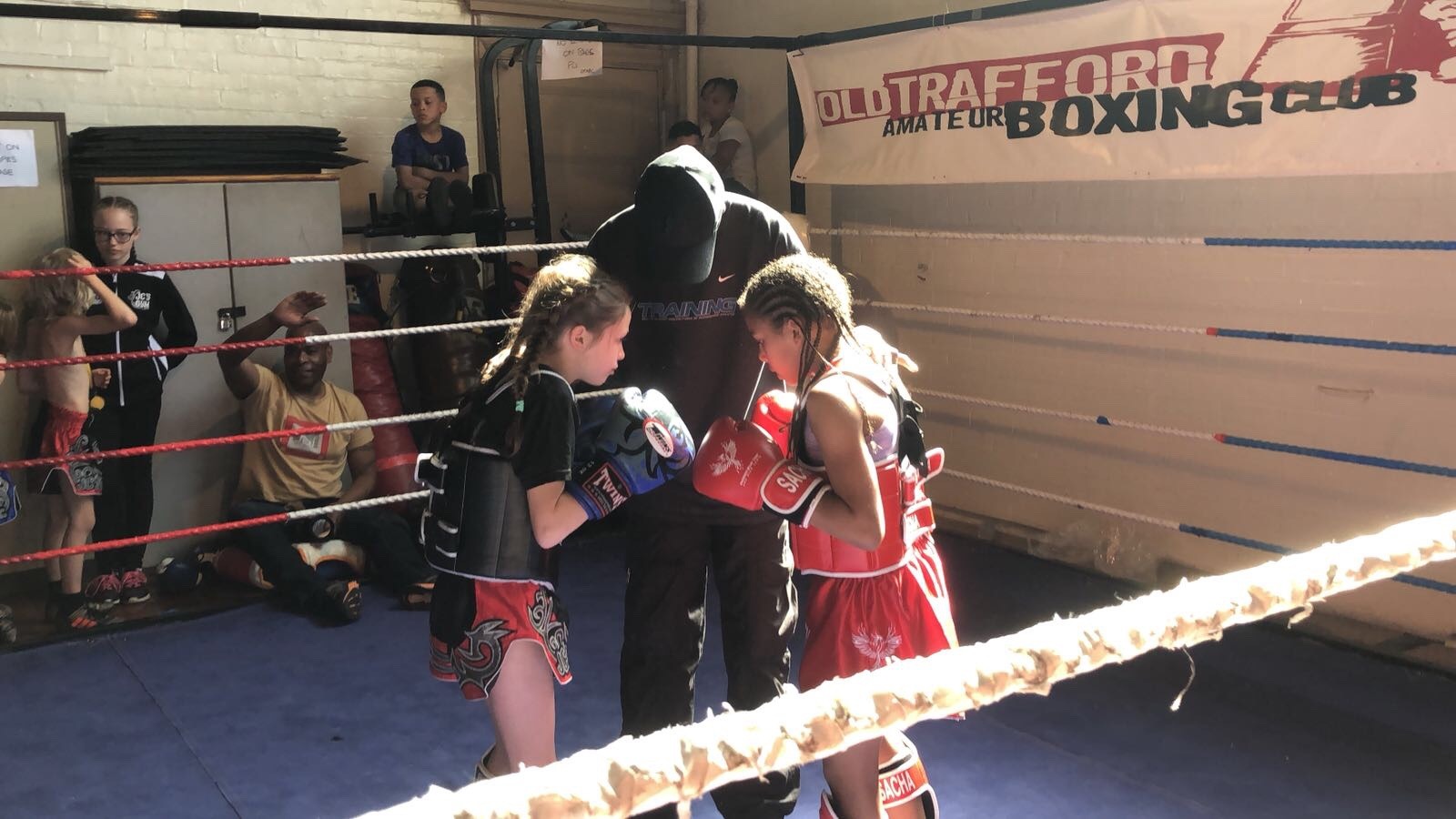
G CAMP INTER-CLUB
ST JOHNS CENTRE, OLD TRAFFORD, M16 7GX on SUNDAY 24th November 2019. 35
Doors open 12pm first fight is at 1pm
G CAMP INTER-CLUB
ST JOHNS CENTRE, OLD TRAFFORD, M16 7GX on SUNDAY 24th November 2019. 35
Doors open 12pm first fight is at 1pm

Fights
Fights are on Saturday 30th Novembxer. Longfield Suit Prestwich. Doors open 4.45 pm, first fight 5.30 pm
Tickets
Adults £30
Children £15

Starts 10th September 2019
8pm till 9pm
It doesn’t matter how old you are, what level of fitness you have or how much experience you have of exercising. Phoenix Thai Boxing welcomes you with open arms. Whether you choose a class, or opt for personal training, or both, we’re here to help you reach your fitness goals.
A typical class starts with an easy warm-up which leads onto the basics of boxing, kicks, knees and elbows to the Thai pad, a beginner will also learn how to hold the pads correctly. Students learn to put their combinations together working with a partner and using shadowboxing.
How Muay Thai is helping Parkinson’s patients stand up to the disease
At the KF1 Gym in Hong Kong’s Mong Kok district, a unique initiative has seen a group of Parkinson’s patients take up the Thai martial art
Led by former top-level fighters, the sessions focus on four things Parkinson’s sufferers often lose: confidence, balance, fitness and spirit
Monday, 10 June 2019, 5:00:AM
Michael Leung wasn’t sure what to make of the offer he was given to take part in today’s Muay Thai training session.
Aged 49, he has spent the past 12 months coming to terms with being diagnosed with Parkinson’s disease. His body is still adapting to the doses of medicine he now needs to take daily, as well as the after-effects, while his mind is focusing on the fight ahead.
But after some urging from friends, Leung decided to see what this ancient Thai martial art was all about and, more importantly, what it might do for him. The results – judging by the sweat that stains his shirt and the smile on his face – have been all positive.
“I’ve enjoyed this very much – it’s great,” Leung says. “I feel confident, and it helped my co-ordination because I am usually stiff. But right now, after punching, I feel great. I really like it. I really like this feeling.”
Leung is not his real name. Like many Parkinson’s patients, he is wary of word getting out because of the stigma that surrounds the illness. He is a schoolteacher.
We’re three floors up inside a dusty mixed-use building in Mong Kok that has definitely seen better days. Inside the KF1 Gym, however, there’s an immediate sense of purpose. The walls are lined with gloves, the shelves stacked with tape and other tools of the trade. There are images everywhere of fighters both past and present and there is – as always – anticipation in the air.
Muay Thai couple’s non-profit gym puts village kids on the right road
Over the past month or so, a unique initiative has been regularly taking place here on the mats and around the punching bags as a group of Parkinson’s sufferers have taken to Muay Thai. The initial idea was that these training sessions would focus on balance, concentration and – vitally – confidence, aspects of daily life that are directly affected by the disease.
“This condition cannot be cured,” Leung says. “It’s a long-term fight, and you have to face that. First you have to find out what medicines are comfortable for you, with little side effects. Then I wanted to find ways to do exercise. It’s important to stay active.”
Parkinson’s is a long-term degenerative disorder that affects the central nervous system. It is most noticeable through the shaking or slowness of movement that emerges in patients. The disease affects an estimated seven to 10 million people around the world, according to the Parkinson’s News Today website.
The cause of the disease remains a mystery but the symptoms arrive following a decrease in the production of one of the brain’s chemical messengers – dopamine – which in turn causes abnormal (or uncontrolled) brain activity.
Medication can control symptoms but the reaction is different for each patient, according to Winnie Chan Yin of the Hong Kong Parkinson’s Patients Support Group. The association is run by Parkinson’s sufferers who know first-hand that the effects of the disease, and these medications, can vary.
Chan says there are around 10,000 people in Hong Kong diagnosed with the disease.
“So we organise activities, we encourage and we help each other,” says the 57-year-old, who was diagnosed with the disease 24 years ago. “Overseas, we have seen that Parkinson’s patients do all sorts of things, so we wanted to do this. Through training you can see the change. You can see they can grow in confidence and manage the disease better.”
Chan was one of the initiators of the Hong Kong Muay Thai programme, alongside one of her organisation’s patrons, retired policeman James Elms.
Elms, 75, has a long history of working with charities in Hong Kong, as well as supporting combat sports. He co-founded the Full Contact Boxing Association back in the 1980s. It was there that he first worked with Kong Fu-tak, one of the city’s most fearsome pro fighters, through a career that took in Muay Thai and kick boxing, and just about anything else thrown at the fighter.
After retiring from the ring, Kong, now 62, established the Fu Tak gym chain and has trained tens of thousands of fighters, from pros to enthusiastic amateurs.
“In Muay Thai there are four requirements,” Kong says. “You have to have confidence, good balance, be physically fit and you have to have spirit, or tenacity. Parkinson’s patients lose these four things, so we thought we could build them up in these four areas. We start them slowly and show them that, yes, they can do it. So start slowly, push them a little bit, and get their confidence back. Because of this, things that they thought they might never do again, they can. You can see them become positive.”
Today, about 15 Parkinson’s patients at different stages of the disease have been taking part in a class directed by former Muay Thai champion Chan Kai-tik, who still fights as well as coaches. The 31-year-old coach says that when figuring out what exercises would have the greatest impact, the gym had to take into account that the physical needs and abilities depend on the individual. So there are deep stretches, balance poses – and then they all start hitting the bags. With relish.
“Balance is not good, so we adapt,” coach Chan says. “We use the ropes in the ring, or the punching bags, if they need to jump about, as they have something to lean against to make them more stable.
“We also see what movements everyone is capable of. We are very careful to make sure everyone can join in. You can see their spirits rise as they look at each other. Everyone likes to hit the bags and to learn how to throw a punch because this makes you feel good. You can see that in their eyes, and in their smiles.”
So far, one four-week course has been completed and a new course is being devised. There will also be a charity fight night at Southorn Stadium on June 13, with profits going to support the Parkinson’s Muay Thai initiative.
“There are a lot more people wanting to join us now,” Winnie Chan says. “They are learning that you can do a lot more than just sitting down. They can get a bit of their lives back.”
Set-up SCMP DAILY ALERTS
Read on scmp.com
Copyright © 2019 South China Morning Post Publishers Ltd.

On bank holiday Monday 27th May 2019 there will be a joint class for all ages from 7pm till 8pm. That means the adult class and the junior class will both be at 7pm. Thanks
Kru
P.s please retweet, Facebook, emails , text or just plainly phone who you know that comes to gym.
Children 11am till 12 noon
Adults 12.15pm till 1.15pm

May 4th
Longfeield suit
First fight 5.30

Saturday 13th April
Address
Club 147
260 manchester road
Walkden
Manchester
M283tr
Doors open 1
First fight 2
Weigh in 11:00
Tommy 27kg 10 vs Liam 27kg 9
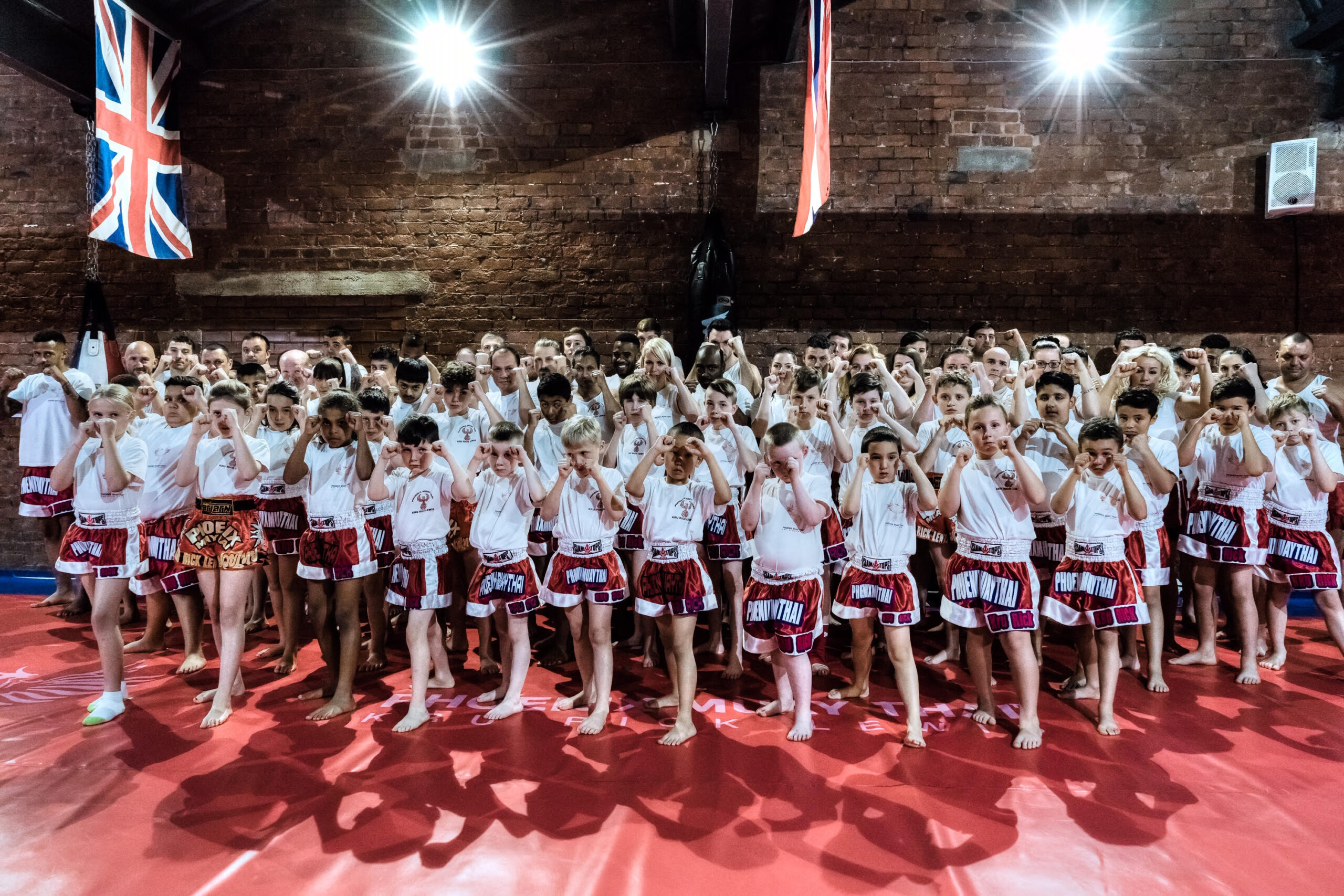
What’s your New Years resolution?
Is it to get fit?
Lose a few pounds?
Perhaps make some new friends?
Thai boxing may be the answer.
Phoenix Muay Thai is a traditional but friendly Thai boxing club run by Rick Lewis (a Thai Boxing champion who trained under Master Phil Nurse and Grand Master Sken).
What you can expect;
1. Friendly people
2. Children’s classes (from 5 upwards)
3. Expert tuition in Thai boxing
4. To become much more able to defend yourself.
5. You will lose weight and be much fitter (the classes will give you the kind of workout that leaves you sweaty and smiling).
What you won’t get
1. You won’t be forced to do anything you can’t do.
2. You won’t be made to feel uncomfortable.
There are NO joining fees and no monthly payments. It’s just a nice easy £6 per lesson.
By KAWEEWIT KAEWJINDA, THE ASSOCIATED PRESS
BANGKOK — The sight of two preteen boys pummeling each other with fists, elbows, knees and feet as a boisterous crowd shouts wagers at each other is considered good, clean sport in Thailand.
However, the death earlier this month of a 13-year-old Muay Thai contender may push forward changes to protect other youngsters in Thai kickboxing.
Anucha Tasako died of a brain hemorrhage two days after he was knocked out in a bout on Nov. 10, his 174th match in a career that began at age 8.
His death was a fluke, said some of the sport’s boosters. They said that the referee did not stop the fight soon enough, and that no doctor was available.
But even those boys who can carry on fighting are almost guaranteed serious long-term health damage, according to a new report by a Thai doctor.
Thai lawmakers recently suggested barring children younger than 12 from competitive boxing, but boxing enthusiasts strongly oppose the change. They say the sport is part of Thai culture and gives poor families the opportunity to raise a champion that will lift their economic circumstances.
Anucha was born in the poor northeastern province of Kalasin and raised by his grandparents since his parents split up when he was 3. Anucha was already becoming his family’s breadwinner when his uncle, a physical education teacher and boxing trainer, brought him to the Bangkok suburb of Samut Prakarn around a year ago to pursue a big-time boxing career.
Anucha’s days started at 4:30 a.m. with a run and light training at the boxing gym. He attended school from 8 a.m. to 4 p.m. before heading back to the gym for more training until 8 p.m. Bedtime was 10 p.m.
Tapakorn Takimnok, 15, a fellow boxer and a friend of Anucha, said he woke up the younger boy every day and never once heard him complain.
“He’d spring right out of bed every time I woke him up,” said Tapakorn. “He always trained hard and kept any emotions to himself.”
Anucha could occasionally earn as much as 10,000 to 40,000 baht ($300 to $1,200) for each fight he won, which he would give to his grandparents, siblings and uncles, Tapakorn said, adding that Anucha earned more than other young fighters because he fought often and was considered a gifted boxer. Young amateur boxers typically earn around 500 to 1,000 baht ($15 to 30) a fight.
“I told him to stop boxing,” said Anucha’s 75-year-old grandmother, Subin Tasako. “He told me: Grandma, what else can I do? I’m young and I can’t work. If I stop boxing, how would I earn money to pay for school or support you? That’s what he said.” Subin said she didn’t know how to respond.
Footage of Anucha’s fatal fight, posted online by Thai media outlets, show him briefly stumbling to the floor after taking a knee to his leg from his opponent. He picks himself back up, and the referee promptly allows the fight to resume, but Anucha appears to have had the fight knocked out of him.
Moments later, he is staggering and defenseless against the ropes, as his opponent lands at least four hard punches to Anucha’s head, leaving him dazed, and perhaps even unconscious before he hits the floor and bangs his head hard on the mat.
Dr. Witaya Sungkarat, a doctor from Ramathibodi Hospital in Bangkok, spent five years conducting a study published last month that compared brain development between young boxers and children not involved with the sport.
The study’s results clearly show that boxing causes irreparable damage to a young child’s developing brain, he said, adding that the longer each participant had boxed, the worse their condition became.
“If we keep letting children box and injure their brains without implementing measures to protect them, their futures are predictable,” Witaya said.
Witaya understands part of the sport’s appeal. “People like to watch children box because they don’t lose on purpose and they genuinely fight each other,” he said, referring to the common perception that many professional boxing matches are fixed to accommodate bookies.
But Anucha’s case, he said, shows how inadequate oversight in the Thai boxing industry had led young boxers to be overworked.
“It’s the system that abused him. The system allowed him to fight this much and this often at such a young age,” Witaya said. “There’s a loophole in the system that allowed him to become a professional fighter without any preventive measures.”
Witaya referenced a provision allowing children to be paid “rewards” rather than being paid compensation for work. And while professional Muay Thai titles are only open to competitors age 15 or older and two major Bangkok stadiums have weight minimums, children can fight in unofficial matches outside the World Muay Thai Council supervision with a guardian’s permission.
Sukrit Parekrithawet, a lawyer who represents several boxing camps, said the recently proposed legislation to regulate the sport was conceived by outsiders who do not understand it.
He cited the success of former Thai boxing Olympic gold medalists such as Somluck Kamsing, who began his boxing career at the tender age of 7. Like many top-tier Muay Thai boxers, he made a transition to more lucrative conventional boxing, and became the first Thai athlete to win an Olympic gold medal, in the featherweight boxing competition in the 1996 Olympic Games in Atlanta.
“If these guys did not start fighting at a young age would they be world champions today?” Sukrit said, adding his opinion that allowing children to box is not dangerous because the blows are not as forceful.
At the Jitmuangnon Gym in Bangkok, 10-year-old Chaichana Saengngern rises every day at around 4 a.m. to train before going to school, then returning to work out some more. He has 20 bouts under his belt since first stepping into the ring at the age of 8.
“He needs to fight in real matches to be a good fighter,” said Chaichana’s uncle, Suthep Saengngern, speaking days after Anucha’s death. “He can’t just dance around in the gym.”
Suthep said he doesn’t support banning children from boxing because it would rob many poor Thai families of the chance for their offspring to become professional athletes.
“Every family’s economic background is different. People with money send their kids to play golf, tennis, swimming or shooting. But poor people can’t do that. We can only do boxing. This is our option,” Suthep said.